
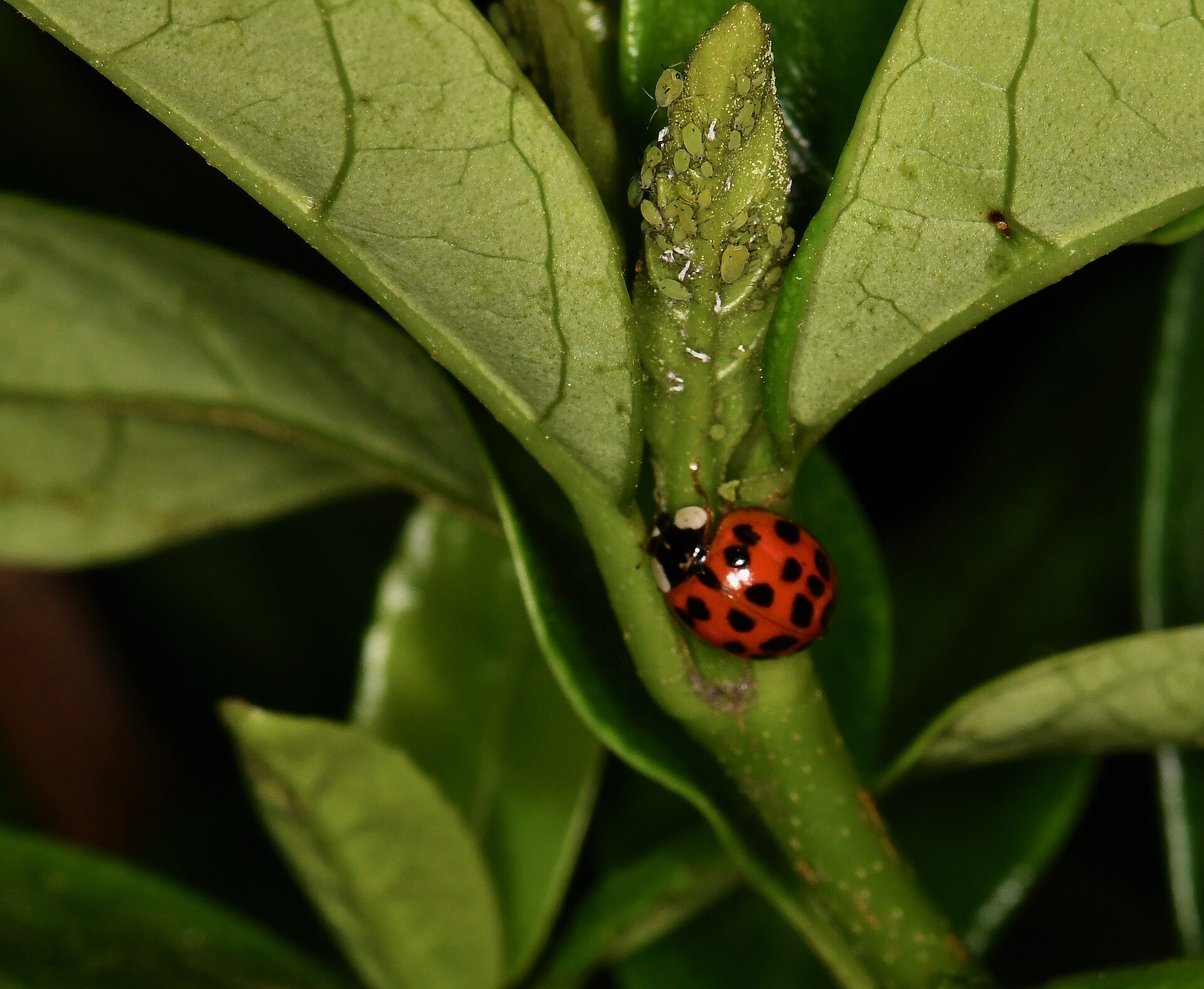
Finding insects on a crop often prompts an immediate reaction: looking for ways to eliminate them. The problem is that not all of them are damaging the plants. Some pollinate flowers, others hunt pests, and others lay their eggs in harmful insects and interrupt their development. Applying an insecticide without distinguishing between them can eliminate the very organisms keeping the problem under control.
Beneficial insects do not replace observation or solve every infestation on their own. Their usefulness depends on the crop, the pest, the climate, the availability of food and shelter, previous pesticide applications and the timing of intervention. As part of integrated management, they can help prevent imbalances and reduce unnecessary interventions.
This guide explains how to recognize their activity, assess whether they are actually helping and create favorable conditions for them. The aim is to help growers, gardeners and anyone interested in agriculture make a responsible first decision they can apply in their own plot.
Observe first: not every insect is a pest
Finding an insect on a plant does not automatically make it a pest. To be considered an agricultural problem, its population must be capable of causing damage that justifies intervention. An organism can be present without significantly affecting crop yield, quality or survival.
Insect damage can also be confused with symptoms of disease, nutrient deficiencies, overwatering, salinity, sunscald or cold injury. Before using any control method, answer three questions:
Which organism is present?
Is that organism causing the damage you see?
Is its population or the damage increasing?
If any answer is unclear, you do not yet have enough information to choose a treatment. A detailed photograph, a securely contained sample and a record of the affected plant can help when consulting an agricultural adviser, a laboratory, a state plant health committee or a local specialist.
Inspect the whole plant
Pests and their natural enemies do not always occupy the same places. Aphids often cluster on tender shoots and the undersides of leaves. Some larvae stay close to these colonies, while certain parasitoids are so small that they may go unnoticed.
During your inspection, look at:
New shoots, flowers, fruits and stems.
The upper and lower surfaces of leaves.
Branch junctions and sheltered areas.
Soil, mulch and plant debris around the plant.
The presence of eggs, larvae, pupae, adults or shed skins.
Spots, holes, deformities, honeydew or sooty mold.
Insects feeding on other insects.
Aphid mummies or bodies with changes in color and shape.
Ants constantly moving up and down the stems.
Ants deserve attention because some species feed on the honeydew produced by aphids, whiteflies, scale insects and mealybugs. In return, they may protect these insects from their predators. This does not mean that all ants should be eliminated; it means their relationship with the pest should be considered when interpreting what is happening.
Monitor consistently
Occasional observation helps, but a simple record lets you tell whether the situation is improving or worsening. Choose several representative points in the growing area and inspect them at consistent intervals. In a garden, this might mean five or ten plants; in a commercial operation, sampling must be designed around the crop, its area and the distribution of the problem.
Record at least:
Date and location.
Crop and growth stage.
The part of the plant examined.
The identified pest or observed symptom.
The approximate number of individuals or percentage of affected plants.
Natural enemies found.
New damage since the previous inspection.
Rain, intense heat, wind or other relevant conditions.
Recent actions taken.
There is no universal insect count that tells you when to intervene. Thresholds depend on the crop, its growth stage, the value of the harvest, the plant's capacity to recover and regional technical recommendations. Commercial production should use economic thresholds or intervention criteria validated for the specific crop and pest combination.
A sticky trap can support monitoring of flying insects, especially in protected growing environments, but it does not replace direct inspection. It can also catch beneficial organisms. Place and check it with a defined purpose, rather than treating it as automatic proof that spraying is necessary.
Look for signs of natural control
The simultaneous presence of a pest and its enemies does not necessarily indicate failure. Predators and parasitoids need a certain supply of prey or hosts to remain in an area. The practical goal is not always to reduce the pest population to zero, but to keep it below the level at which it causes significant losses.
Encouraging signs include:
Adult lady beetles or their larvae near aphid colonies.
Lacewing larvae moving among small insects.
Hoverfly larvae within or around aphid colonies.
Swollen, hardened or differently colored aphids that may have been parasitized.
Pest eggs changing color as a result of parasitism.
A gradual decline in young individuals of the pest.
Damage that stops spreading even though some insects are still present.
A single lady beetle does not guarantee control, just as an isolated pest does not justify a pesticide application. The trend matters. If the pest population remains stable or declines while natural enemies increase, conserving the system and continuing to monitor is usually more sensible than intervening immediately.
Which insects help and what they do
The term “beneficial insects” covers organisms with different functions. Some control pests, others carry pollen, and others help break down organic matter. An insect can be useful in one crop without having the same effect in another. Even within a single family, species have different habits, so identification must be specific enough to support the decision you need to make.
Predators: hunting and consuming multiple prey
Predators feed on many individuals during their lifetime. They may do so as adults, as larvae or at both stages.
Some of the best known are:
Lady beetles, also called ladybugs or ladybirds: several species consume aphids, scale insects, mealybugs, mites or other small organisms. Their larvae are elongated and look very different from the adults, which is why they are sometimes mistaken for pests.
Lacewings: their larvae have curved jaws and feed on aphids, eggs, thrips, whiteflies and other small prey. Adults of some species consume nectar, pollen or honeydew.
Hoverflies: the adults resemble bees or wasps, visit flowers and may contribute to pollination. The larvae of certain species consume aphids.
Predatory bugs: these include groups that attack thrips, eggs, small larvae and other insects. They must be distinguished from bugs that feed on plants.
Ground beetles: several species hunt larvae, pupae and other organisms on the soil surface or within the soil.
Praying mantises: these eat a variety of insects, rather than selecting only pests. They can also catch pollinators and other allies, so their presence does not amount to targeted pest control.
Spiders and predatory mites also contribute to natural control, although they are not insects. Spiders are arachnids, and mites belong to another group of arthropods. In agricultural practice, include them when monitoring natural enemies.
Parasitoids: developing in a host
Parasitoids are mainly small wasps and flies. The female lays one or more eggs on or inside a host insect. The immature stage feeds on it and eventually kills it. Unlike a predator, each larva usually completes its development using one or a few hosts.
There are parasitoids of eggs, larvae, pupae and adults. Some have very specific relationships with particular pests, which can make them useful in a carefully designed biological control program.
Examples used in agriculture include species of Trichogramma against the eggs of certain moths, wasps that parasitize aphids, and parasitoids associated with whiteflies, leafminers or fruit flies. However, naming a genus is not enough to recommend a release: the species, strain, target host and site conditions must be compatible.
Mexico's National Service for Agrifood Health, Safety and Quality (Senasica) maintains programs for the research, evaluation and regulation of biological control agents. Its National Reference Center for Biological Control works with organisms that have been identified and evaluated for use in plant health management.
Pollinators: enabling fruit and seed formation
Bees, bumblebees, flies, butterflies, moths, beetles and some wasps carry pollen between flowers. Their contribution depends on the plant species, the structure of the flower, the insect's behavior and environmental conditions.
Not all crops require insect pollination. Some are wind-pollinated, self-pollinate or are harvested before producing fruits and seeds. In crops that depend wholly or partly on flower visitors, however, the abundance, diversity and distribution of pollinators can affect fruit set, shape or uniformity.
A bee seen on a flower should not be mistaken for a pest. Nests or swarms should not be destroyed without assessing the risk, either. If a colony is in a walkway, home or work area, keep your distance and seek help from someone trained to identify it and, where feasible, manage it safely.
Decomposers and organisms working in the soil
Some beetles, larvae and other invertebrates break up plant residues, manure or organic matter. This activity helps recycle materials, although the outcome depends on the soil, moisture, temperature and land management.
Not every larva found in compost or soil is harmful. Before removing it, check where it was, what it was feeding on and whether any roots are damaged. Context helps distinguish an organism associated with decomposing matter from one consuming living plant tissue.
How to support beneficial insects in a field or garden
The most accessible strategy is usually to conserve the natural enemies already living at the site. This is known as conservation biological control. It involves reducing the factors that eliminate them and providing resources that allow them to feed, find shelter and reproduce.
You do not need to transform the entire plot at once. A small, measurable and well-placed change can serve as a trial before you expand the strategy.
Steps to begin supportive management
Identify the main problem.
Choose a specific pest or situation. Record the affected crop, its growth stage, the damage and the areas where it occurs. Avoid starting with the vague aim of “attracting good insects”; first define the function you need to strengthen.Recognize the natural enemies present.
Carry out several inspections before changing your practices. Observe adults and immature stages. Use a hand lens and photographs with a size reference. Natural enemy galleries, such as the one from the University of California Integrated Pest Management Program, provide guidance, but local identification may require specialist support.Review previous pesticide applications.
Check which products were used, on what date, over what area and against which organism. Some residues may still affect natural enemies or leave a later release with little chance of establishing.Address easily corrected causes first.
Remove highly localized infestations when feasible, prune only affected tissue that can be disposed of safely, correct excessive nitrogen fertilization and control host weeds when they are associated with the pest. Do not remove all spontaneous vegetation without assessing its role: some plants may harbor pests, while others provide flowers or shelter.Establish compatible floral resources.
Choose plants adapted to the climate, soil and irrigation regime. A combination with staggered flowering can provide nectar and pollen for longer. Small, accessible flowers are used by various parasitoids and adult predators. Before planting, confirm that the species are neither invasive nor important hosts of diseases or pests affecting the main crop.Conserve shelter while maintaining crop health.
Vegetated strips, managed field margins, soil cover and areas with little intense disturbance can support different arthropods. Design them to avoid obstructing harvest, creating fire hazards, accumulating excessive moisture or encouraging rodents and troublesome weeds.Reduce unnecessary disturbance.
Avoid calendar-based spraying unless monitoring supports it. Limit drift onto flowers and field margins, and avoid clearing the entire plot at once if a safe area can be retained. Adapt these measures to the plant health and operational needs of each system.Measure the result.
Compare the modified area with a similar one where possible. Record pests, natural enemies, damage and yield. More flowers or insects do not, by themselves, demonstrate better control; you need to observe their relationship with the problem you intended to solve.
Design a flower strip with a purpose
A flower strip should not be selected solely for its appearance. To make it useful in agriculture, consider:
Adaptation to the climate and available water.
Flowering season and duration.
Height and growth habit.
Ease of management.
The risk of becoming a weed.
Compatibility with the crop and its diseases.
Access to nectar for small insects.
The distance between the strip and the area you want to benefit.
The possibility of maintaining flowers before and after the crop's critical period.
Species suited to a mild, humid climate may fail in a hot, dry region. In Mexico, decisions must account for altitude, the rainy season, irrigation availability and regional flora. Native plants can be a valuable option when they are correctly identified and pose no plant health risk, but “native” does not automatically mean appropriate for every plot.
Flower strips must also be protected from insecticide drift. The University of California recommends protecting both natural enemies and pollinators through integrated management, targeted applications and careful product selection when intervention is essential, as described in its guide to protecting natural enemies and pollinators.
Water, shelter and soil management
Insects need water, but deep containers and standing water are best avoided because they can become mosquito breeding sites or pose a drowning risk. In small gardens, irrigation moisture, dew and shallow surfaces with footholds may be sufficient. In agricultural fields, the main objective should be an irrigation system suited to the crop, without waterlogging.
Vegetation cover or mulch can moderate temperature and provide shelter for soil organisms. In very humid environments, however, they can also encourage slugs, diseases or aeration problems. Adjust the thickness, material and inspection frequency to the climate and crop.
Frequent tillage disrupts shelter and exposes organisms living in the soil. Reducing it may benefit some predators, but that decision is part of broader agronomic management. Consider compaction, weeds, infiltration, residues, machinery type and the production system.
Key idea: Before buying or releasing insects, protect those already working in your growing area. Identification, monitoring and habitat conservation are usually the most practical starting points.
When to release insects and how to do it responsibly
Purchasing natural enemies is part of augmentative biological control. It can be useful in greenhouses, nurseries and certain field crops, but should not be treated as a generic purchase. A living organism needs specific conditions and does not work like a product with an immediate effect.
Inoculative releases introduce a population intended to act over an extended period, while inundative releases use larger numbers to achieve control in a relatively short time. The choice, release rate and frequency must be based on the supplier's instructions, monitoring and a specific technical recommendation.
Classical biological control is different: it involves introducing and establishing a natural enemy, usually from the region where an invasive pest originated. It requires rigorous studies and official authorization. Do not attempt it through personal imports or by releasing species obtained online.
Checks before buying
Before carrying out a release, confirm that:
The pest has been correctly identified.
The agent controls that species and the stage present.
Temperature and humidity are within its operating range.
There is enough food or a suitable host for it to act.
No incompatible products have been applied recently.
The supplier identifies the species and provides handling instructions.
The organism can legally be used in the region and production system.
You can monitor the outcome after release.
A common name is not enough. “Lacewings,” “lady beetles” or “beneficial wasps” may refer to species with different behaviors and requirements. Buying the wrong species increases costs, reduces effectiveness and may create ecological risks.
Collecting large numbers of insects elsewhere and relocating them is also inadvisable. They could be misidentified, carry unwanted organisms or fail to adapt to the new environment. In Mexico, importing and using biological control agents is subject to regulation; when in doubt, consult Senasica or a local plant health organization.
Basic release procedure
Coordinate delivery. Plan to receive the material when you can inspect and release it according to the instructions. Avoid leaving living organisms inside a hot vehicle or exposed to sunlight.
Inspect the shipment. Confirm the species, quantity, date, packaging condition and signs of activity. Document any problems before release.
Follow storage requirements. Do not refrigerate, heat or feed the organisms on your own initiative. Follow the specific instructions, because each agent has different limits.
Prepare the area. Check that no incompatible application is scheduled and that irrigation will not immediately wash away the material. Reduce disturbance during establishment.
Distribute as the supplier instructs. Some organisms are placed on cards, in sachets or containers, or directly on plants. Do not improvise a release rate or concentrate everything in one place when the instructions call for distribution.
Record the release. Note the date, batch, quantity, location, temperature, approximate humidity and crop conditions.
Evaluate establishment. Look for the agent, signs of predation or parasitism, and changes in the pest population. Use the same sampling method as before so you can compare results.
Decide based on the trend. A release may need to be repeated, combined with cultural practices or supported by environmental adjustments. If the pest continues to increase, seek advice before changing agents or applying an incompatible product.
Releasing insects when an infestation is already severe may produce insufficient results. In many programs, the right time is at the start of the problem, or even preventively when there is a reliable history of pest occurrence. This is especially relevant in greenhouses, where frequent monitoring helps detect small outbreaks.
Management decisions, limits and common mistakes
Beneficial insects are a tool in integrated pest management, rather than a guarantee of elimination. Their effect can change with heavy rain, extreme temperatures, dust, lack of flowers, scarce prey, competition, cultivation practices and pesticide residues.
A realistic response combines prevention, cultural control, physical measures, conservation of natural enemies and, only when justified, selective intervention.
Quick decision guide
| Observed situation | Initial decision |
|---|---|
| Few pests, stable damage and active natural enemies | Continue monitoring and avoid unnecessary disturbance |
| The pest population is increasing slowly, and natural enemies are present but still scarce | Correct contributing cultivation practices, protect shelter and inspect more frequently |
| The problem is concentrated on a few plants | Remove or treat only the affected spots when feasible |
| Damage is spreading and exceeds the technical intervention threshold | Choose a compatible, targeted measure with specialist advice |
| The pest cannot be confidently identified | Do not release organisms or apply insecticides until identification is confirmed |
| A regulated or unusual pest is suspected | Securely isolate the sample and notify the plant health authority |
Mistake 1: applying insecticide whenever you find an insect
A broad-spectrum application can kill predators, parasitoids and pollinators along with the pest. If natural enemies take longer to recover, the pest may return without enough natural regulation.
Your first response should be to identify and measure. When chemical intervention is justified, choose only products authorized for the crop and pest, use the label rate and target the area that needs treatment. “Natural,” “organic” or “homemade” does not automatically mean harmless to beneficial insects, people or plants.
Mistake 2: assuming more flowers always mean better control
A poorly designed flower mix can compete for water, hinder fieldwork, harbor pests or bloom outside the required period. Define which organisms you want to support, when they need to be active and which plant species suit the region.
Start with a small strip. If monitoring confirms benefits and management proves feasible, you can expand it.
Mistake 3: buying lady beetles without checking the species or environment
Some commercially available lady beetles may disperse soon after release if the site does not offer food, water or shelter. Others may not be suited to the target pest. The same applies to lacewings, predatory mites and parasitoids.
A responsible purchase starts with compatibility between the agent, prey, crop and climate. The supplier should provide identification, recommendations and storage conditions.
Mistake 4: mistaking immature stages for pests
Lady beetle, lacewing and hoverfly larvae do not resemble their adults. Removing them because of their appearance reduces natural control. Create a small photographic guide to the pests and allies found in your own plot, including eggs, larvae, pupae and adults.
Photographs should be treated as a reference, rather than definitive identification when species look very similar. For decisions with a major economic or plant health impact, consult a specialist.
Mistake 5: expecting instant results
Predators need to locate and consume prey; parasitoids must find hosts and complete part of their life cycle. Change can be gradual. This makes it necessary to intervene before damage becomes irreversible and to use records to distinguish an ongoing control process from an infestation that continues to grow.
Waiting does not mean abandoning the crop. It means inspecting at intervals suited to the pest's rate of development and having a compatible backup measure ready.
Mistake 6: combining beneficial agents with incompatible applications
A product targeting the pest can also affect the released organism. Incompatibility may depend on the active ingredient, formulation, rate, route of exposure and time since application.
Do not combine recommendations taken from different sources. Consult the label, the biological agent's information sheet and, when needed, a compatibility chart provided by the manufacturer or a technical adviser.
Safety and responsible pesticide use
If preventive, cultural, mechanical and biological measures do not keep the problem at an acceptable level, an authorized crop protection product may be considered. Before using it:
Confirm the pest and crop listed on the label.
Verify that its registration is current.
Follow the rates, number of applications and intervals.
Use the specified protective equipment.
Observe re-entry and preharvest intervals.
Avoid applying in windy conditions or when there is a risk of drift.
Protect water bodies, beehives, flowers and inhabited areas.
Store and dispose of containers according to the label and local requirements.
In Mexico, COFEPRIS publishes information on pesticide registration. The label provides legal and technical instructions, rather than optional recommendations. NOM-232-SSA1-2009 establishes requirements related to pesticide containers, packaging and labeling.
Never increase the rate in an attempt to speed up control. Do not combine products unless the label allows it. Commercial operations must also comply with the relevant food safety, certification and market requirements.
Action plan and final check
The safest way to begin is to focus on a specific problem and keep a simple record. During the first week, you can take the following actions:
Select an affected area and take reference photographs.
Identify the plant, the damage and the organism that may be responsible.
Inspect the area for predators, parasitoids and signs of parasitism.
Review previous pesticide applications and recent fieldwork.
Correct a manageable factor, such as a localized infestation, excess fertilization or drift.
Mark the plants you observed and inspect them at the same time of day several days later.
Compare new damage, the pest population and natural enemy activity.
If the pest population declines or stabilizes, continue conservation and monitoring. If it increases and approaches the relevant threshold, combine cultural or physical measures and seek guidance on choosing a compatible control. If you cannot identify the organism, avoid acting without that information.
Checklist
I confirmed which organism causes the damage and its life stage.
I inspected several plants, rather than just one affected leaf.
I recorded pests, damage and natural enemies using the same method.
I avoided removing insects whose role I do not yet understand.
I checked compatibility before releasing a biological agent.
If I need a pesticide, I will verify its registration, label and safety measures.
I scheduled another inspection to assess the trend.
Closing thoughts
The main value of beneficial insects lies in changing how decisions are made, rather than automatically replacing a spray with a release: observe first, recognize relationships between organisms and conserve the processes already limiting pests.
A healthy plot can contain harmful and beneficial insects at the same time. The right decision depends on the damage, the trend and the ability of natural enemies to respond. Maintaining functional biodiversity, reducing unnecessary applications and designing compatible shelter can strengthen that regulation.
As a first action, inspect five plants in the same area today. Photograph both the pest and any insects nearby, then repeat the observation in three to seven days. That comparison will be more useful than acting solely on the impression of having found insects.
Frequently asked questions
Do beneficial insects eliminate a pest completely?
Generally, no. Their role is usually to keep the population at a level that causes little damage. Seeking complete elimination can lead to unnecessary interventions and disrupt the crop's balance.
Can I use flowering plants in any plot?
Not without assessing them first. The species must suit the climate and management practices, avoid significant competition with the crop and not serve as a host for relevant pests or diseases.
What should I do if I find an insect I do not recognize?
Do not eliminate it or release it elsewhere. Take photographs of the insect, the plant and the damage; record the location and consult a local technical source. If it appears to be an unusual or regulated pest, contact the plant health authority.