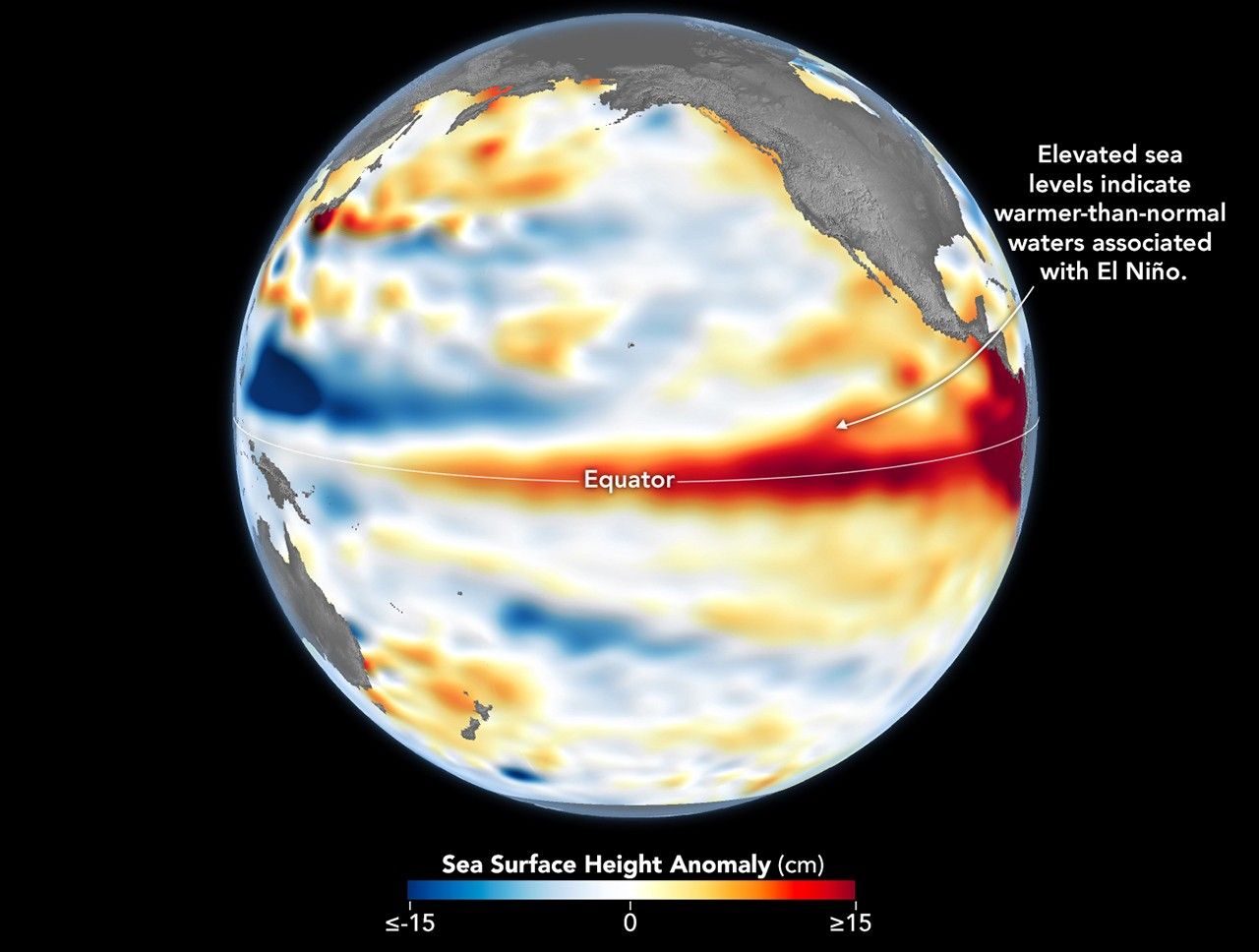
El Niño develops when surface waters in the central and eastern Pacific become unusually warm and alter atmospheric circulation. According to FAO, it generally occurs every two to seven years and lasts nine to twelve months. Its effects depend on the region, season and strength of the event.
In June 2026, FAO and WFP called for early preparation for the possible impacts of a strong El Niño in high-risk countries. “Possible” matters: a forecast shifts probabilities; it does not guarantee drought or flooding in a particular place.
A forecast is not destiny
NOAA shows historical patterns: during El Niño, some areas tend to receive more rain and others less. These are averages across many events. To choose a planting date, you need your national weather service's bulletin, the seasonal outlook and the actual state of your soil and water storage.
Prepare for two scenarios
If drier conditions become more likely: check water reserves, prioritize fields, keep soil covered, choose suitable crop cycles and avoid committing all your seed to one planting date. If heavy rain becomes more likely: clear drainage channels, protect soil from erosion, raise vulnerable supplies off the ground and plan safe routes for people and animals.
In either case, record planting dates, varieties and costs. Break large decisions into stages when that is agronomically and financially possible. Early action aims to preserve options before a threat becomes a loss.
A three-level decision guide
- Green: only a global signal is present; keep watching and check your supplies.
- Amber: the regional forecast matches local vulnerabilities; prepare water, drainage, soil and supplies.
- Red: a local alert and field observations agree; put the agreed plan into action and record each change.
Avoid three mistakes
Do not assume that an effect seen in another country will happen on your farm. Do not confuse El Niño with climate change: they have different causes, although warming can worsen extremes. And do not treat a single model run as certainty; look for agreement across updates and official sources.
Sources and updates
- El Niño and agriculture — FAO
- Temperature and precipitation patterns — NOAA/CPC
- Anticipatory action in 2026 — FAO/WFP
Sources checked September 7, 2026.